Most people know Lake City as an exit on the interstate. Few know the stories behind it. This part of North Florida has a long history that stretches from early Native communities to Spanish explorers, railroads, and wartime training. Here are lesser-known facts about the city.
Utina People Lived Here
In 1539, the Hernando de Soto expedition met a large Native American group called the northern Utina, possibly near present-day Lake City. They were part of the western Timucua people. In the 1600s, Spanish missionaries set up a mission called Santa Cruz de Tarihica west of the city site. More Details about these early chapters are on the city’s Wikipedia page.
A Seminole Leader Fought From Here
The best-known resident of Alligator Town was Halpatter Tustenuggee, also called Alligator Warrior. He led Seminole warriors in the Second Seminole War, from 1835 to 1842, as they resisted removal to the west. By 1845, the last of the Seminole had left the area or been forced out.
Forts Stood Downtown
During the Second Seminole War, soldiers built Fort Alligator, also called Fort Lancaster, in what is now downtown Lake City. Fort White, on the Santa Fe River, also dates to this time.
The Railroad Changed Everything
A railroad linking Jacksonville to Alligator opened in November 1858. It brought trade and travelers, and the town renamed itself Lake City the next year. Railroads later made Lake City an important junction.
A Raid and a Battle
On February 11, 1864, Confederate troops defeated a Union cavalry raid in Lake City. They then moved to Olustee Station, where the Battle of Olustee took place on February 20. It was the only major battle in Florida during the war.
Fire Burned the Town
In 1874, a fire destroyed most of the wooden buildings in Lake City. That same year, the city’s first newspaper, the Lake City Reporter, began publishing. The Bigelow Building went up in 1876 and later served as City Hall.
A College That Came and Went
After Florida Agricultural College moved to Gainesville in 1905, Baptist leaders opened Columbia College on the same site in 1907. It lasted about ten years before debt overwhelmed it. During World War I, the campus became a training site, then a hospital, which grew into the Veterans hospital.
A Forest School Became a College
After World War II, an air base became the Columbia Forestry School in 1947. The University of Florida took over in 1950. It became a junior college in 1962 and later grew into the local state college that offers four-year degrees today.
A Hub for Wood Products
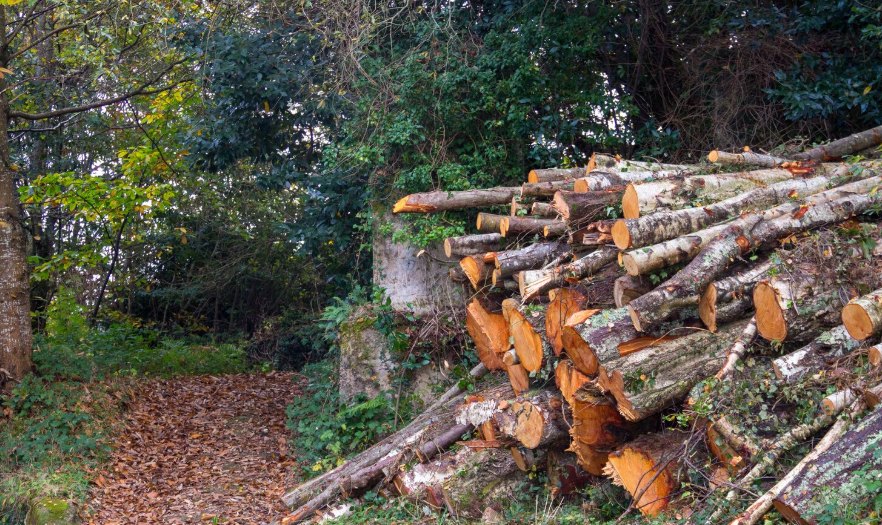
By 1950, the forest products industry had become a mainstay of the local economy. Turpentine, lumber, and pulpwood supported many families. Trees shaped the city’s economy long before they shaped its yards.
Hams and Hobbies
The Columbia Amateur Radio Society formed in 1958 and still exists. In 1959, residents celebrated the city’s centennial with parades, fireworks, and period costumes. Many men grew whiskers, which caused good-natured arguments with their wives.
Interstates Arrived in 1963
Interstate 75 and Interstate 10 opened in 1963 and crossed at Lake City. The highways turned the city into a major stop for travelers. Even before that, U.S. 41 and U.S. 90 crossed here from 1927.
Schools Integrated Late
Columbia County schools were not desegregated in the 1960s. In 1970, a judge ordered all public schools in the county to integrate. Understanding that history helps explain how the community changed.
A Library Arrives
The Columbia County Public Library opened in 1978. In the 1990s, downtown was revitalized with new shops and restaurants. The historic commercial district was listed on the National Register of Historic Places in 1994.
Wild Water Nearby
Ichetucknee Springs State Park keeps a steady temperature between about 71 and 74 degrees all year. Osceola National Forest has a 2,000-acre natural pond called Ocean Pond. O’Leno State Park, about 20 miles south, hosts the Alligator Warrior Festival each October.
Why the Past Matters
Lake City’s story includes Native communities, forts, railroads, a famous battle, and wartime training. Visit the historical museum, walk downtown, and talk to longtime residents. The stories add depth to the city you see today.